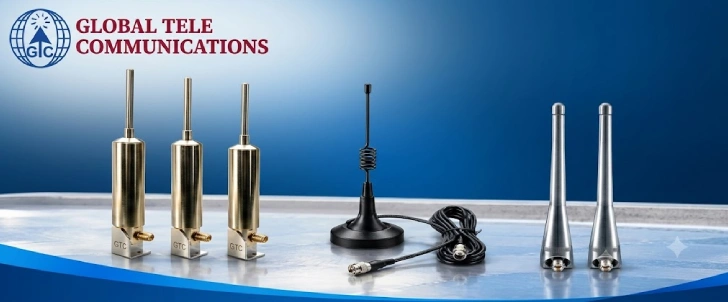
High Gain WiFi Antenna Dealers in India
Global Tele Communications caters to communication and wireless networking requirements for businesses seeking suitable connectivity equipment. A high gain WiFi antenna is designed to focus radio frequency energy in particular directions or improve signal reception, depending on its design. These antennas are used in wireless networking, point-to-point links, industrial communication systems, and other applications where coverage and signal performance are important.
Businesses searching for high gain WiFi antenna dealers in India need to consider antenna gain, operating frequency, connector compatibility, installation requirements, and the wireless equipment being used. Selecting an appropriate antenna can help improve connectivity in suitable environments, extend useful coverage in a particular direction, and support more reliable wireless communication.
From offices and commercial facilities to industrial sites and outdoor networking installations, high gain WiFi antennas can support different connectivity requirements when correctly selected and installed.
What Is a High Gain WiFi Antenna?
A high gain WiFi antenna is an antenna designed to concentrate or receive radio frequency energy more effectively in certain directions than a lower-gain antenna with a broader radiation pattern. Antenna gain is generally expressed in decibels relative to an isotropic radiator (dBi).
How Do High Gain WiFi Antennas Operate?
A high gain antenna shapes its radiation pattern to direct more energy toward particular areas rather than distributing it equally in every direction. Depending on the antenna design, this can improve signal strength along a desired path or help receive a distant wireless signal.
However, higher gain does not automatically mean better coverage everywhere. Directional antennas are useful for targeted links, while omnidirectional antennas are often preferred when connectivity is required around a central access point.
Why Is Antenna Selection Important?
Antenna performance depends on the wireless frequency, installation position, surrounding obstacles, cable losses, transmitter power, receiver sensitivity, and the antenna's radiation pattern. Choosing an antenna compatible with the existing WiFi equipment is essential for achieving the intended result.
Types of High Gain WiFi Antennas
Different antenna designs serve different wireless networking requirements.
Directional WiFi Antennas
Radio frequency energy is directed in a certain direction using directional antennas.They are useful for point-to-point connections, connecting buildings, and wireless links between fixed locations with a suitable line of sight.
Omnidirectional WiFi Antennas
Omnidirectional antennas are appropriate for applications requiring multidirectional communication because they disperse energy horizontally around the antenna. Their coverage depends on installation height, surroundings, antenna gain, and network configuration.
Panel WiFi Antennas
Panel antennas typically provide a directional radiation pattern in a compact form. They may be suitable for targeted indoor or outdoor coverage and selected wireless networking installations.
Yagi and Other Directional Antennas
Yagi antennas and similar directional designs are used in applications that require focused reception or transmission. Compatibility with the relevant WiFi frequency and wireless equipment must be verified before installation.
Key Features of High Gain WiFi Antennas
The features of a high gain WiFi antenna vary according to its design, frequency range, construction, and intended use.
High Antenna Gain
A higher-gain antenna can concentrate energy in a narrower radiation pattern or improve reception from a preferred direction. The required gain should be selected according to the coverage area and link requirements.
Directional or Omnidirectional Design
Directional models are suitable for targeted wireless links, while omnidirectional models can support connectivity around a central installation. Choosing the right pattern helps align the antenna with the network's intended coverage.
Frequency Compatibility
WiFi antennas must support the frequency bands used by the connected equipment. Common WiFi bands include 2.4 GHz and 5 GHz, while some modern equipment also operates in the 6 GHz band. Actual support depends on the antenna model and regulatory requirements.
Connector Compatibility
Connector types and cable interfaces vary between antennas and wireless devices. Buyers should confirm connector specifications, impedance, and cable requirements before ordering.
Indoor and Outdoor Installation Options
Some antennas are designed for indoor environments, while others are built for outdoor exposure. Outdoor models may offer weather-resistant construction, but the specific protection rating should be checked in the product datasheet.
Mounting Flexibility
Depending on the model, antennas may support pole, wall, bracket, or device-mounted installation. The mounting method should provide stable positioning and suitable alignment.
Benefits of High Gain WiFi Antennas
Improved Targeted Coverage
A suitably selected high gain antenna can help direct wireless coverage toward a required location. This is especially useful when connecting fixed locations or addressing coverage needs in a particular direction.
Support for Longer Wireless Links
Directional antennas can support longer wireless links when sufficient line of sight, suitable equipment, adequate link budget, and permitted transmission power are available.
Better Signal Reception in Suitable Conditions
A desired signal's reception may be enhanced by an antenna made for the necessary frequency and orientation. Results depend on environmental interference, obstructions, installation quality, and equipment compatibility.
Flexible Network Deployment
Different antenna patterns and mounting options allow businesses to design wireless connections for offices, warehouses, industrial facilities, campuses, and outdoor sites.
Support for Specialized Connectivity Requirements
When normal access-point antennas are unable to offer the necessary directional coverage, high gain antennas may be helpful. Proper planning helps ensure the selected antenna matches the application.
Technical Specifications of High Gain WiFi Antennas
Before purchasing an antenna, buyers should review the following technical specifications and confirm the exact values in the manufacturer's datasheet.
- Antenna Type: Directional, omnidirectional, panel, Yagi, or another supported design.
- Frequency Range: Must match the intended WiFi band, such as 2.4 GHz, 5 GHz, or 6 GHz, where supported.
- Antenna Gain: Expressed in dBi; the required value depends on the coverage direction and link budget.
- Polarization: Vertical, horizontal, dual, or other configurations depending on the model.
- Radiation Pattern: Defines how radio frequency energy is distributed around the antenna.
- Impedance: Commonly 50 ohms for many RF and WiFi antenna systems; confirm compatibility with the connected equipment.
- Connector Type: Depends on the antenna and device interface; verify the exact connector before purchase.
- VSWR or Return Loss: Indicates impedance matching and the amount of reflected RF power, as specified by the manufacturer.
- Operating Environment: Indoor or outdoor use, based on the product's specified environmental protection.
- Construction Material: Varies by model and may be selected according to mechanical strength and installation conditions.
- Dimensions and Weight: Important for mounting, available space, and installation planning.
- Compatibility: Must match the WiFi access point, router, radio, connector, frequency, and supported antenna configuration.
- Regulatory Compliance: The complete installation must comply with applicable Indian wireless and radio-frequency regulations.
Applications of High Gain WiFi Antennas
High gain antennas can be used across a range of wireless networking and communication environments.
Enterprise and Office Networks
Businesses may use suitable antennas to address specific wireless coverage requirements within offices, commercial buildings, and business campuses.
Point-to-Point Wireless Connectivity
Directional antennas can help establish wireless links between buildings or fixed locations when compatible equipment, suitable alignment, and a viable line of sight are available.
Industrial Facilities and Warehouses
Factories, warehouses, and industrial facilities may require targeted connectivity for network devices, monitoring systems, and operational communication.
Outdoor Wireless Networking
Suitable outdoor antennas can support wireless links across campuses, large properties, and other open environments. Performance depends on the antenna design, installation, interference, and permitted RF settings.
Educational Institutions and Campuses
Schools, colleges, and training centres may use appropriately designed wireless systems to support connectivity between buildings and in selected coverage areas.
Remote Monitoring and Networking
High gain antennas may support compatible wireless monitoring and networking equipment installed at remote or difficult-to-connect locations.
What Should Buyers Check Before Ordering?
- Verify the wireless device's operational frequency.
- Choose a suitable directional or omnidirectional radiation pattern.
- Verify antenna gain and connector compatibility.
- Review cable length and expected signal losses.
- Check indoor or outdoor installation suitability.
- Verify the precise model by requesting the product datasheet.
- Verify applicable regulatory requirements and installation limitations.
Frequently Asked Questions
1. What is a high gain WiFi antenna used for?
A high gain WiFi antenna is used to focus or receive wireless signals more effectively in certain directions. Applications include point-to-point links, targeted coverage, industrial networking, and selected outdoor installations.
2. Does a high gain WiFi antenna increase internet speed?
Not directly. An antenna may improve the wireless link under suitable conditions, which can help network performance. Actual internet speed also depends on the internet connection, router, interference, network congestion, and connected devices.
3. Is a directional or omnidirectional WiFi antenna better?
A directional antenna is generally better for a focused link between specific locations. An omnidirectional antenna is more suitable when coverage is required around a central point. The right choice depends on the intended coverage pattern.
4. Which frequency bands should I check before buying?
Check whether the antenna supports the frequency band used by your wireless equipment. Common WiFi bands include 2.4 GHz and 5 GHz, while 6 GHz support is available in some systems. Always verify the product datasheet.
5. Can high gain WiFi antennas be used outdoors?
Yes, if the selected model is specifically designed for outdoor use. Check its environmental protection rating, mounting arrangement, connector protection, and suitability for local weather conditions.
6. How do I choose the correct antenna gain?
Consider the required distance, line of sight, coverage pattern, cable losses, equipment specifications, and permitted transmission power.Because it can narrow the coverage pattern, higher gain isn't always preferable.
7. What technical information should I ask a dealer to confirm?
Ask about frequency range, gain, polarization, radiation pattern, impedance, connector type, cable requirements, mounting options, environmental rating, and compatibility with your existing wireless equipment.
8. Where in India can I locate suppliers and dealers of high strength WiFi antennas?
Businesses can contact Global Tele Communications to discuss their antenna requirements and confirm available models, specifications, compatibility, pricing, and delivery options.